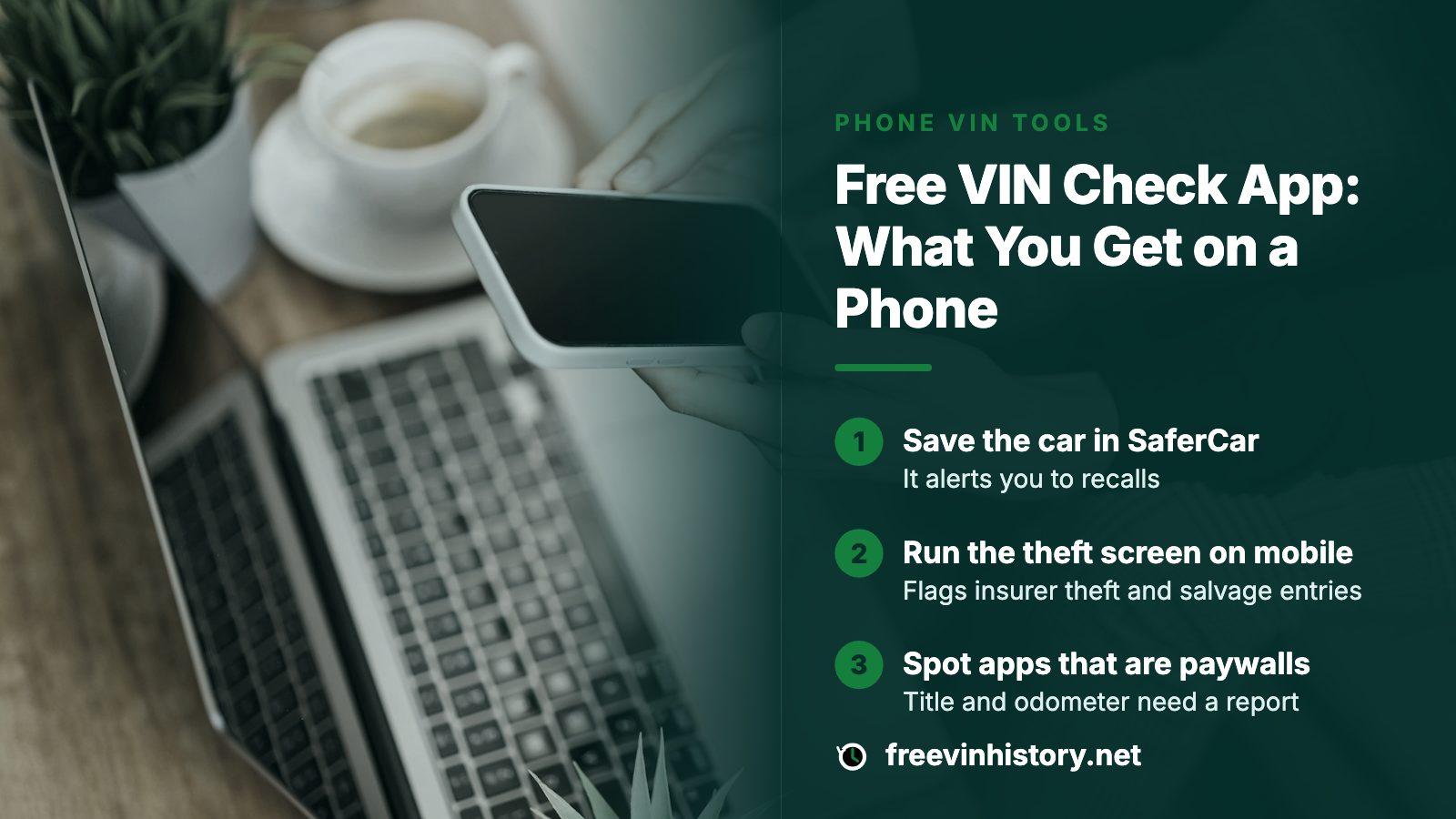
THE SHORT ANSWER
Yes. NHTSA's SaferCar app is free on iOS and Android and sends an alert when a recall is found for the vehicle you saved. NICB's VINCheck, also free, works in a mobile browser and flags theft, salvage and flood entries that insurers submitted. Neither shows title brands, mileage history or accident detail, so use them as a first screen, then step up to a report before you pay a seller.
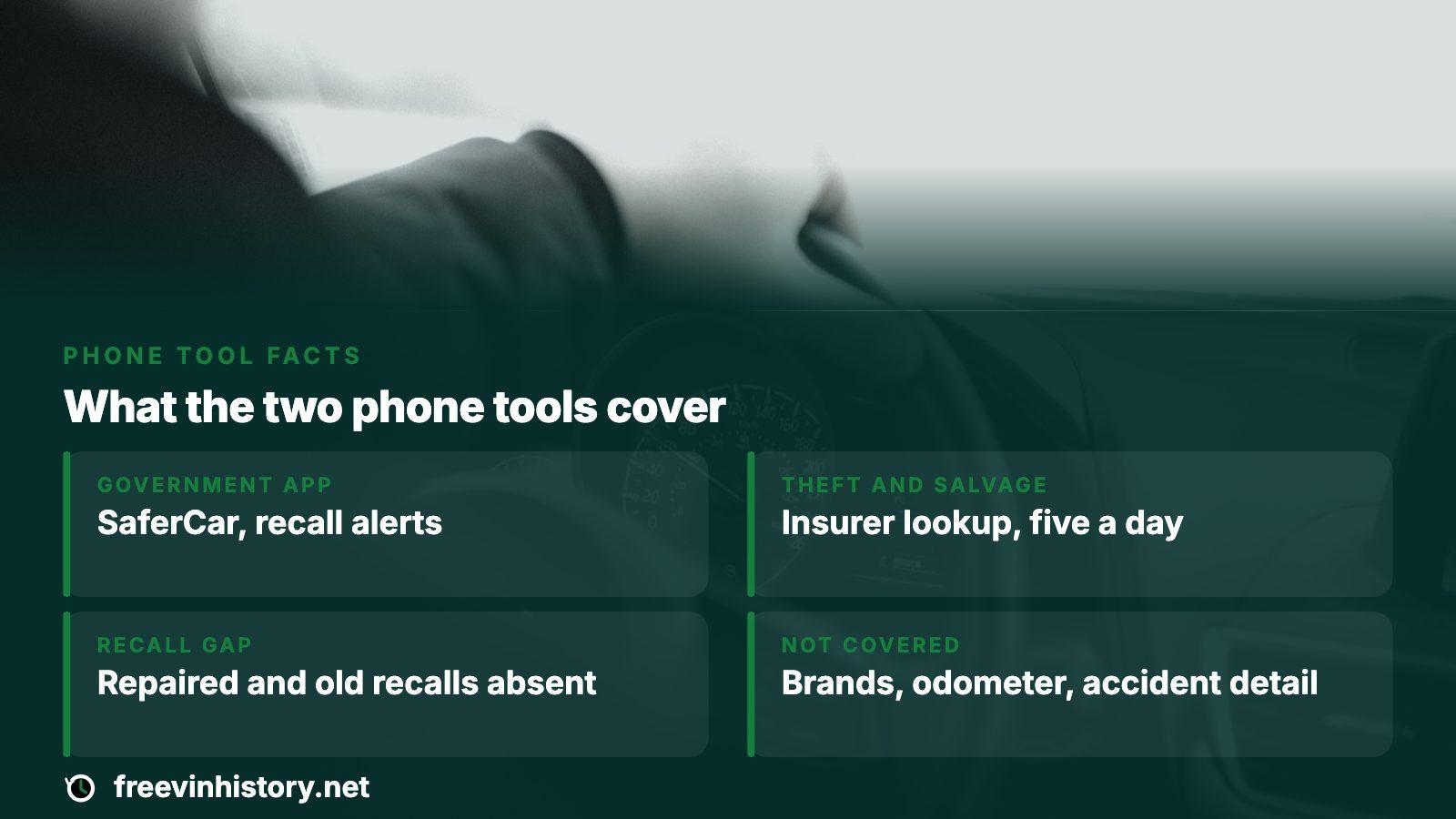
- Government app
- NHTSA SaferCar, iOS and Android, recall alerts
- Theft and salvage flags
- NICB VINCheck, five searches per day per IP address
- Recall data gap
- Repaired recalls and recalls over 15 years old are not listed
- Not covered by either
- Title brands, odometer history, accident detail
What a free VIN check app really is
Search stores for a VIN checker and you get a long list, most of them wrappers around a text box that leads to a sales page. Only one official app turns up, and it is narrower than the name suggests. NHTSA's SaferCar app is a recall tracker. You enter a vehicle, and when a safety recall is found for it, your phone gets an alert.
That is useful, and it costs nothing. It is not a history check. The app says nothing about whether a car was wrecked, flooded, stolen or rolled back on the odometer, which is what most people mean when they type that search.
The two free tools, side by side
| Tool | Where it runs | Answers | Blind spots |
|---|---|---|---|
| SaferCar | iOS and Android app from NHTSA | Unrepaired safety recalls, with alerts later | Recalls already fixed, small makers, non-safety campaigns |
| VINCheck | NICB website, usable in a phone browser | Theft, salvage or flood flags from participating insurers | Police records, insurers that opt out, title and mileage data |
NHTSA's decoder is a third free option. Enter the full VIN and it lists what the maker reported, including the build plant and country. It shows the car at the factory gate and says nothing about the years since.
Setting up SaferCar for a car you are considering
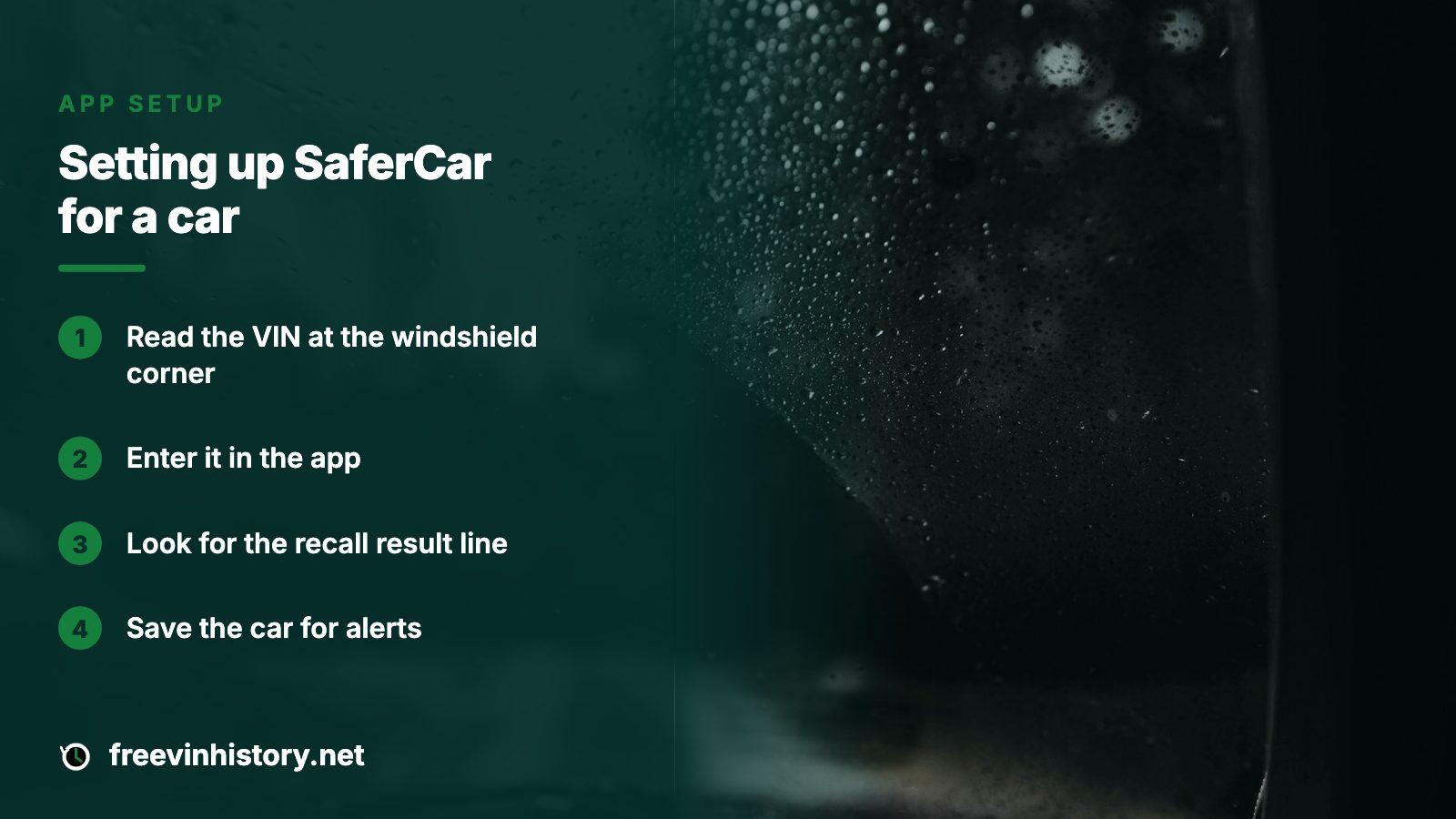
Install the app from the iOS or Android link on NHTSA's recall page, then add the vehicle by VIN. NHTSA also lets you search by license plate and state, and supplying either one is optional. If the plate result shows a past owner's car, the VIN is the dependable route.
- Read the 17-character VIN from the lower windshield corner, or from registration or insurance paperwork.
- Enter it in the app and read the result.
- Look for the line that reports no unrepaired recalls, or for the open campaign it names.
- Keep the vehicle saved so a later recall reaches you.
NHTSA's own advice is to check recalls twice a year, even with alerts on.
Where the recall result can mislead you
A clean recall screen reads like good news, and sometimes it is only a gap. NHTSA says its VIN search skips recalls that were already repaired, so a fixed airbag problem never appears. It also skips some brand-new recalls where the maker has not yet attached every VIN, campaigns older than 15 years, except where the maker extends coverage, and recalls from small manufacturers.
Older cars and new campaigns
If the car is old, a quiet recall result may only mean the campaign aged out. If the recall was announced last week, your VIN may be missing from it for now. NHTSA adds VINs on a rolling basis, so search again before you sign.
Running NICB VINCheck from a phone
VINCheck has no app of its own that we could confirm. It is a web page, and its VIN box shows a camera icon you can use to scan the number; NICB suggests clearing the browser cache if the icon does not appear. Searches are rationed at five a day per connection address, so a shopper comparing several cars on one mobile connection can hit the cap quickly.
The answer covers three flags: reported stolen and not recovered, salvage, or flood damage. A salvage hit means the insurer wrote the car off and paid out instead of repairing it. The car may still have been rebuilt and retitled, which is why the flag deserves follow-up.
What the free layer cannot see
NICB says plainly that VINCheck is not a full history, and it warns buyers against leaning on it alone. It reads insurance records only, from participating insurers that together represent 92.49% of US earned premium, and it does not query law enforcement files. A car can be stolen, badly damaged or carry a troubled title and still return nothing.
- Title brands that a state applied without an insurance claim
- Odometer readings across title transactions
- Accident and damage records with detail
- Liens, impounds and ownership changes
Federal title data fills part of this. The Justice Department's NMVTIS holds five indicators, from the title's current state through brand, mileage, total-loss and salvage entries, and approved providers sell access.
Spotting a free app that is a paywall
Plenty of apps advertise a free check and then ask for a card before showing anything. The FTC's rule of thumb for free trials applies: if you have to hand over payment details, it is not really free, and the card is usually there so the company can bill you later. Before you install, find the terms and the cancellation steps. If they are missing, skip it.
Quick test
A good free lookup shows you a result before it asks for anything. If the first screen wants an email, a card or a subscription choice, you are in a sales funnel, not a lookup.
When to step up to the full report
Use the free tools to rule cars out quickly. Once one is a real candidate, a VIN history report is the next step, because it pulls title, odometer, salvage and accident records that neither the app nor NICB reads. Here, you type the VIN, read a no-cost preview of which records exist, and only then decide on buying.
Buying means one payment for one vehicle, with nothing recurring; the pricing page lists the options. A look at the sample report first shows how the pages are laid out.
Keep the phone check in proportion
Even a full report is paper. The FTC recommends an independent inspection on top of any history report, because histories usually say little about mechanical condition. A short sequence works well: recall app and NICB on the lot, a report once you are serious, and a mechanic before you pay.
Where this information comes from
- NHTSA: Check for Recalls — SaferCar alerts, what a VIN recall search shows and omits, twice-a-year advice.
- NHTSA: VIN Decoder — How the decoder returns build plant and country, as reported by the maker.
- NICB: VINCheck lookup — The free insurer-fed lookup, its daily limit, camera icon and stated gaps.
- U.S. Department of Justice: Understanding an NMVTIS report — The five title indicators and the data sources behind them.
- FTC: Free trials and auto-renewals — Why a card requirement undercuts the word free.
Sources and photos: Facts checked against the sources above in November 2026. Photos by Jakub Żerdzicki, Justin Cron and Miles Loewen on Unsplash; diagrams by FreeVINHistory.
Keep reading
- Free open recall check by VIN: GM, Polaris and every other makeA fuller look at the recall result the SaferCar app is built on.
- Best free VIN check site: what the free options really coverHow the official free lookups compare and which gaps remain.
- Free vehicle history report: what the free sources showWhat free sources show before a paid report.
- Sample reportSee the report layout before deciding to buy.
Frequently asked questions
Is there an official free VIN check app?
NHTSA's SaferCar is the official one, free on iOS and Android. It checks recalls and alerts you when a new one appears for a saved vehicle. Accidents, brands and odometer history are outside its scope, so it covers one slice of the picture.
Does the SaferCar app show accidents or salvage history?
No. It reports safety recalls only. For theft, salvage and flood flags, use NICB VINCheck, and for title, odometer and detailed damage records, use a full history report.
Can I run NICB VINCheck on my phone?
Yes, through a mobile browser. The VIN box has a camera icon for scanning the number. Searches are limited to five per day per IP address, so cellular data shared with others can reach the cap faster than you expect.
Why does a recall check come back clean on a car with problems?
Because the search leaves out repaired recalls, very new campaigns without VINs attached, recalls over 15 years old and small makers. A clean result narrows the risk but does not describe the car's past.
Are free VIN apps safe to install?
Stick to official ones from NHTSA, and read the terms of anything else. If an app asks for a card to show a result, the FTC says that is a sign the offer is not truly free.
Now check the car itself
The guide explains what to look for. The report shows what this VIN has on record.