THE SHORT ANSWER
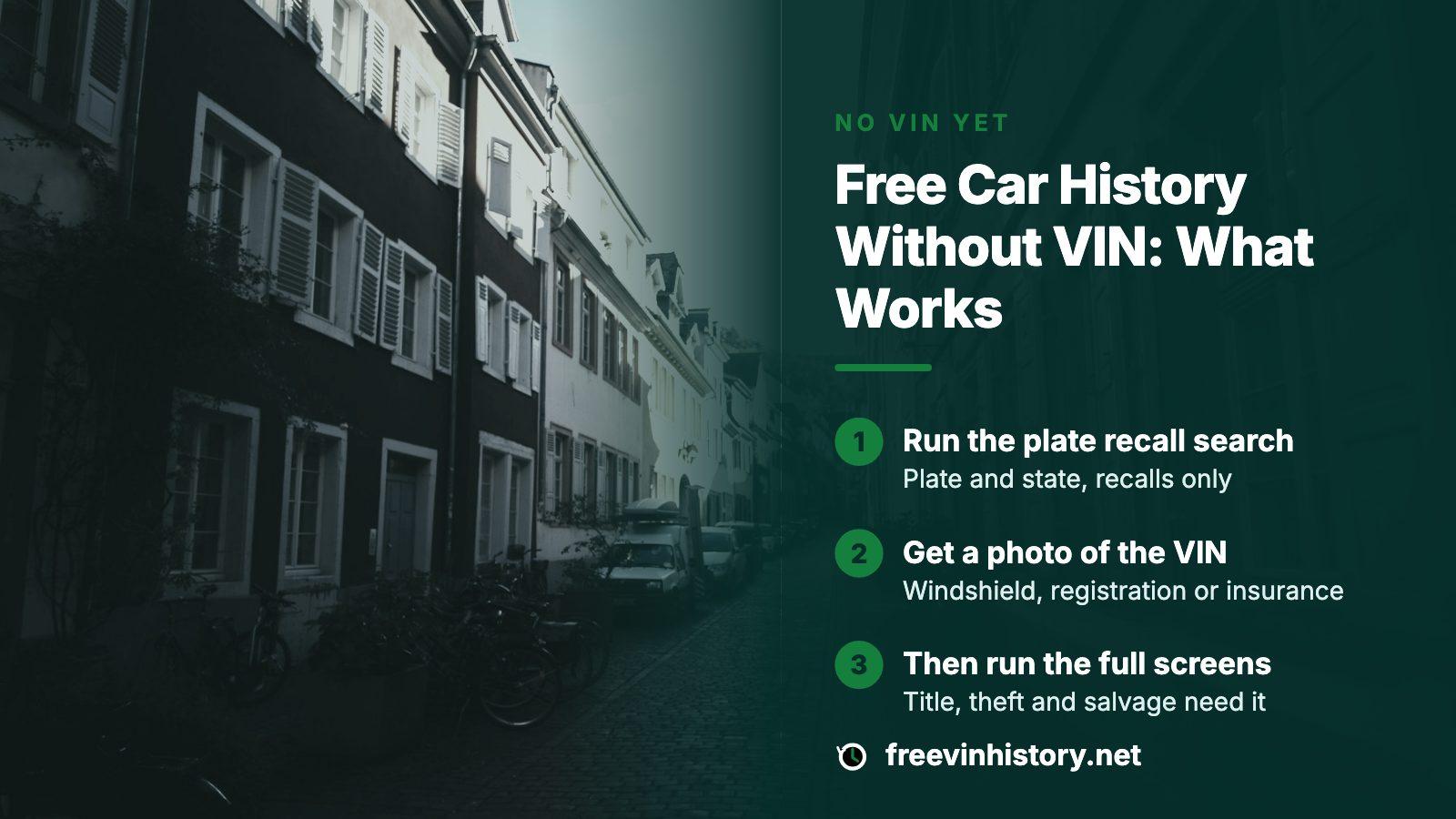
Without a VIN, the only free official search you can run is NHTSA's recall lookup by plate and state, and it shows unrepaired recalls only. Title brands, theft and salvage records need the VIN. Ask the seller to photograph the windshield plate, the registration or the insurance card, then run the free checks and the free preview here.
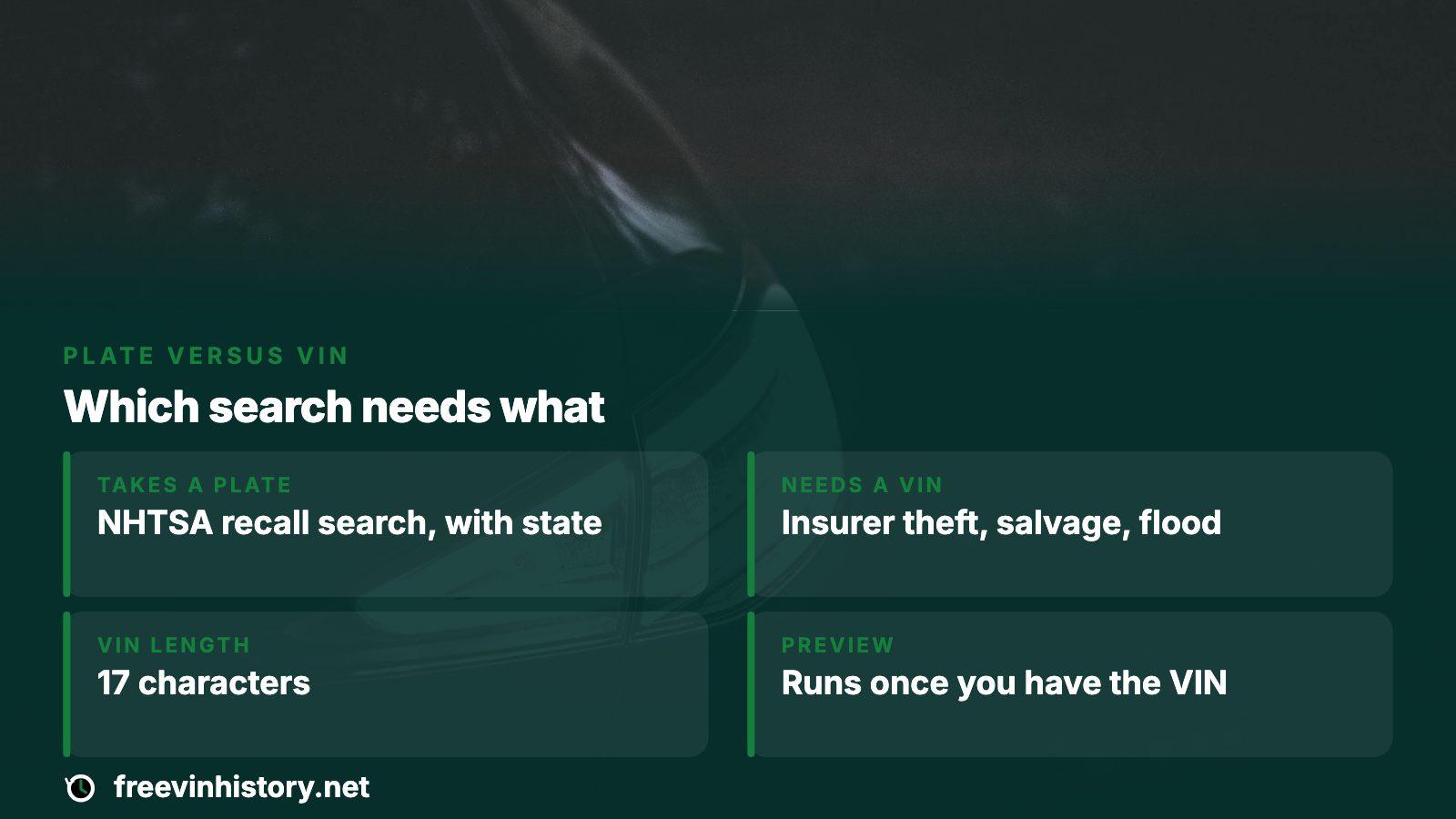
- Takes a plate
- NHTSA recall search, with the state
- Needs a VIN
- NICB theft, salvage and flood search
- VIN length
- 17 characters
- Free preview
- Runs on the VIN once you have it
Why a history check cannot start without the VIN
A car's history is filed under its VIN. Insurers, state title offices and auctions record events against that number, so a search with only a description of the car has nothing to match. Searching by year, make and model returns general notes on the model, which say nothing about the specific vehicle in front of you.
That is why this page spends as much time on getting the number as on the checks themselves. The good news is that the number is rarely hard to find, and a buyer is entitled to ask for it before spending a dollar.
The one free search that accepts a plate
NHTSA's recall page has a state menu and a plate box beside the VIN field. Typing a plate there is optional, and the answer is narrow: whether that specific vehicle has a safety recall nobody has repaired. With none open, you see a message reporting zero unrepaired recalls.
The plate matches come out of state DMV files, according to NHTSA. When the result names a car the seller never owned, the plate may have moved over from an earlier vehicle, and the seller should be asked about it.
A plate result is not a history
A clean recall answer says nothing about floods, thefts, title brands or odometer rollbacks. Treat it as a first filter and nothing more.
Five lawful ways to get the VIN
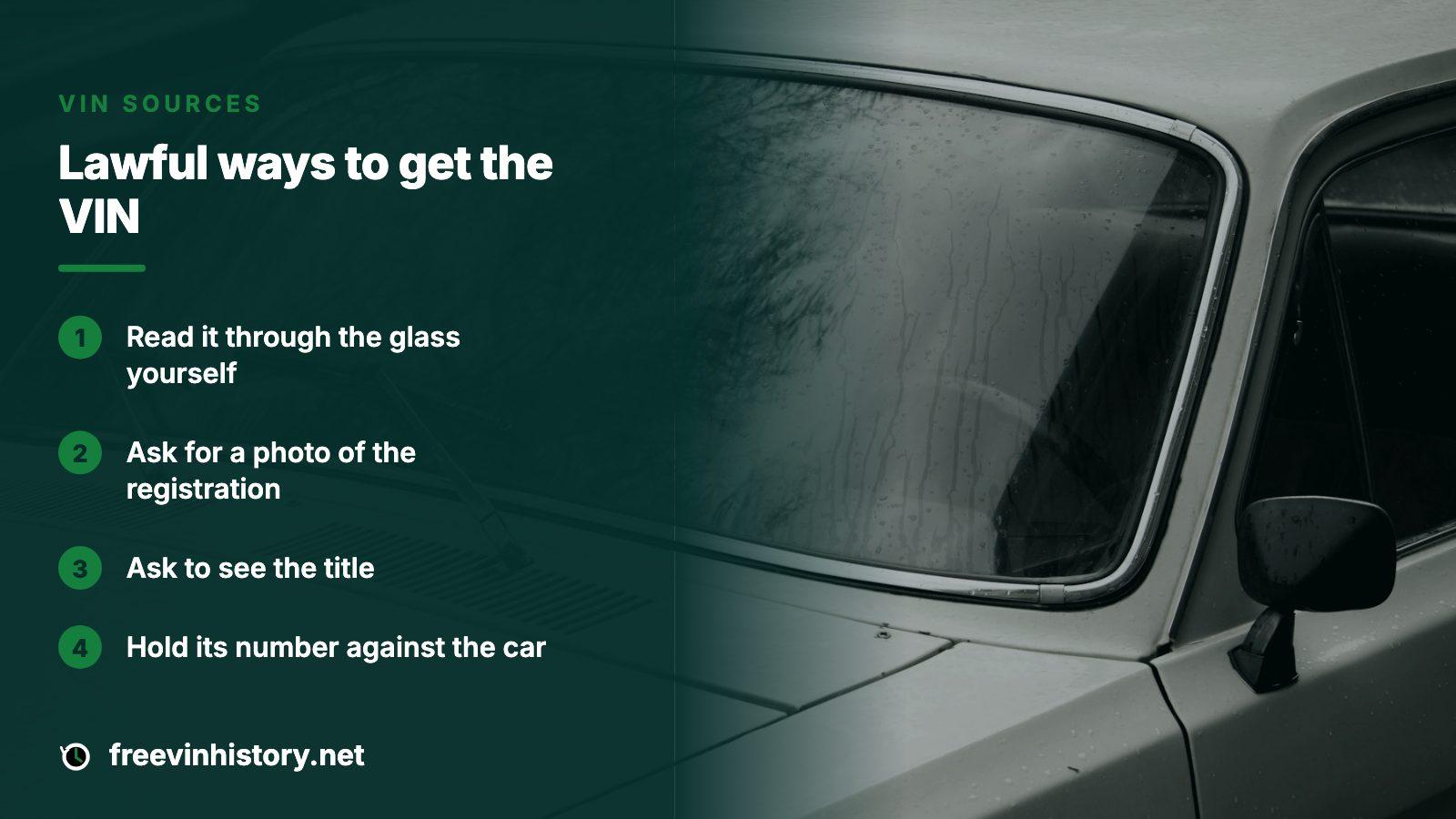
NHTSA describes the 17-character code as sitting at the bottom driver's-side corner of the glass, and it is repeated on the registration, with the insurance card a possible third place. For a car you do not own yet, work down this list.
- Peer at the corner of the glass yourself, or have the seller text a close-up photo.
- Request a picture of the registration card.
- Ask to see the title, then hold its number up against the car.
- Ask for the insurance card, which may print it.
- Scan the online listing or the dealer's inventory page, since many show it beside the price.
Match what you collect against the car itself. A number on paper that differs from the one on the glass is a reason to stop the deal until someone explains it.
Why a stranger cannot pull a VIN from a plate at the DMV
A federal statute restricts what a state DMV may hand over from a vehicle record when the data identifies a person. Permitted uses cover agencies at work, theft and driver safety, recall notices, and legal proceedings. Idle curiosity about a car you might buy is absent.
Skip any site that promises a name or street address tied to a plate. We do not offer it. Our preview begins with a VIN, which describes a vehicle, not a person.
What the free checks show once you have the number
| Free check | Input | What it answers |
|---|---|---|
| NHTSA recall search | Plate and state, or VIN | Does this car have an unrepaired safety recall |
| NICB VINCheck | VIN | Reported stolen and not recovered, or salvage or flood, by participating insurers |
| Preview on this site | VIN | A first look at records tied to the number, before any purchase |
NICB allows five searches a day from one IP address, so save it for the cars you are serious about. It also demands an exact VIN: one mistyped character can hide a match, so copy the number from a photo.
What the free tools leave out
On the NHTSA side, the search omits recalls already repaired, announcements still being linked to individual vehicles, anything older than 15 years, and campaigns from small manufacturers. NICB draws on insurance claims from member companies and leaves police files alone. By its own description, VINCheck falls short of a full report, and a blank result proves little.
- Title brands from state records are outside both tools.
- Odometer readings over the years are outside both tools.
- Auction listings and damage photos are outside both tools.
- Liens and previous use as a rental or fleet car are outside both tools.
When the full report earns its place
For buyers who want more, NICB's own page points to NMVTIS and to outside providers of fuller reports, some of them paid. The federal NMVTIS site presents the system as a consumer defense against title fraud and dangerous cars.
Open with our preview, a no-cost first pass that shows what surfaces for that VIN. If the car still looks like a contender, buy the report once; it never renews, and the prices sit on our pricing page. The report itself is paid.
Red flags when a seller will not share the number
If the seller withholds the VIN, or releases it only after a deposit, take that as information. Honest sellers usually text a photo within minutes. If you are weighing two similar cars, drop the one whose seller stalls.
- The number on the title does not match the glass.
- The listing photos hide the windshield corner.
- The plate pulls up a different make in the recall search.
- The seller pushes you to decide before you can run a check.
Where this information comes from
- NHTSA: Check for Recalls — The plate and state search, where the VIN appears, and the recalls the search leaves out.
- NICB: VINCheck — Free theft, salvage and flood search, its daily cap and its stated limits.
- VehicleHistory.gov: NMVTIS consumer page — The federal title information system and its purpose.
- 18 U.S.C. 2721: Driver's Privacy Protection Act — Why a DMV cannot hand out personal data from a plate to any requester.
Sources and photos: Facts checked against the sources above in November 2026. Photos by Karwin Luo, Tigran Shishmanyan and Maurice Sahl on Unsplash; diagrams by FreeVINHistory.
Keep reading
- Free license plate lookup: the one official search, then the VIN stepsThe plate search in more depth, and what it will not reveal.
- Free open recall check by VIN: GM, Polaris and every other makeWhat to do when the recall search shows an open item.
- Free stolen car check online: what each lookup coversThe theft side of the free checks, step by step.
- Best free VIN check site: what the free options really coverHow the free VIN tools compare once you have the number.
Frequently asked questions
Can I check a car's history with no VIN at all?
Not usefully. Records hang off the VIN, so a plate search only reaches NHTSA's recall data. For title, theft and salvage records, first pull the VIN from the glass, registration, title or insurance card.
Is there a free report by license plate?
Only a recall result. NHTSA takes a plate plus state and lists open recalls for that vehicle. Accidents, owners and title brands are not part of it, and federal privacy law restricts what a DMV discloses.
How do I get the VIN for a car I am about to buy?
Check the driver's-side base of the windshield, then compare against the registration card and title. The insurance card may list it too. Shopping from afar, ask for photos and copy the characters rather than retyping them.
If NICB finds nothing, is the car fine?
No. Only member insurers feed it, and police records are outside its reach, so a blank result leaves gaps. Use it as one filter, then look at title and odometer records before paying.
Is the history report here free?
The preview is free and runs on a VIN. Going further means a single paid report with no renewal, priced on the pricing page.
Now check the car itself
The guide explains what to look for. The report shows what this VIN has on record.