THE SHORT ANSWER
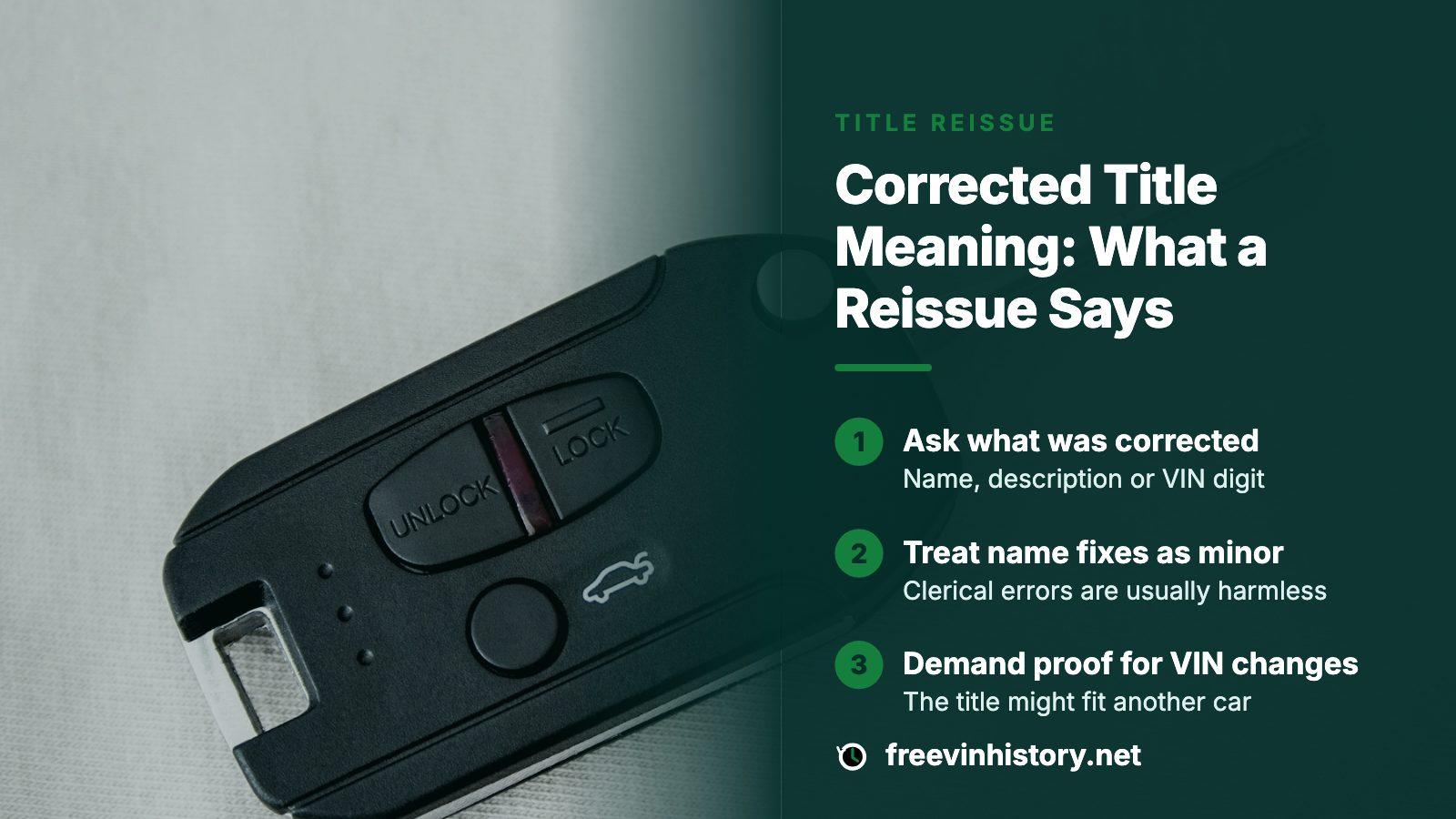
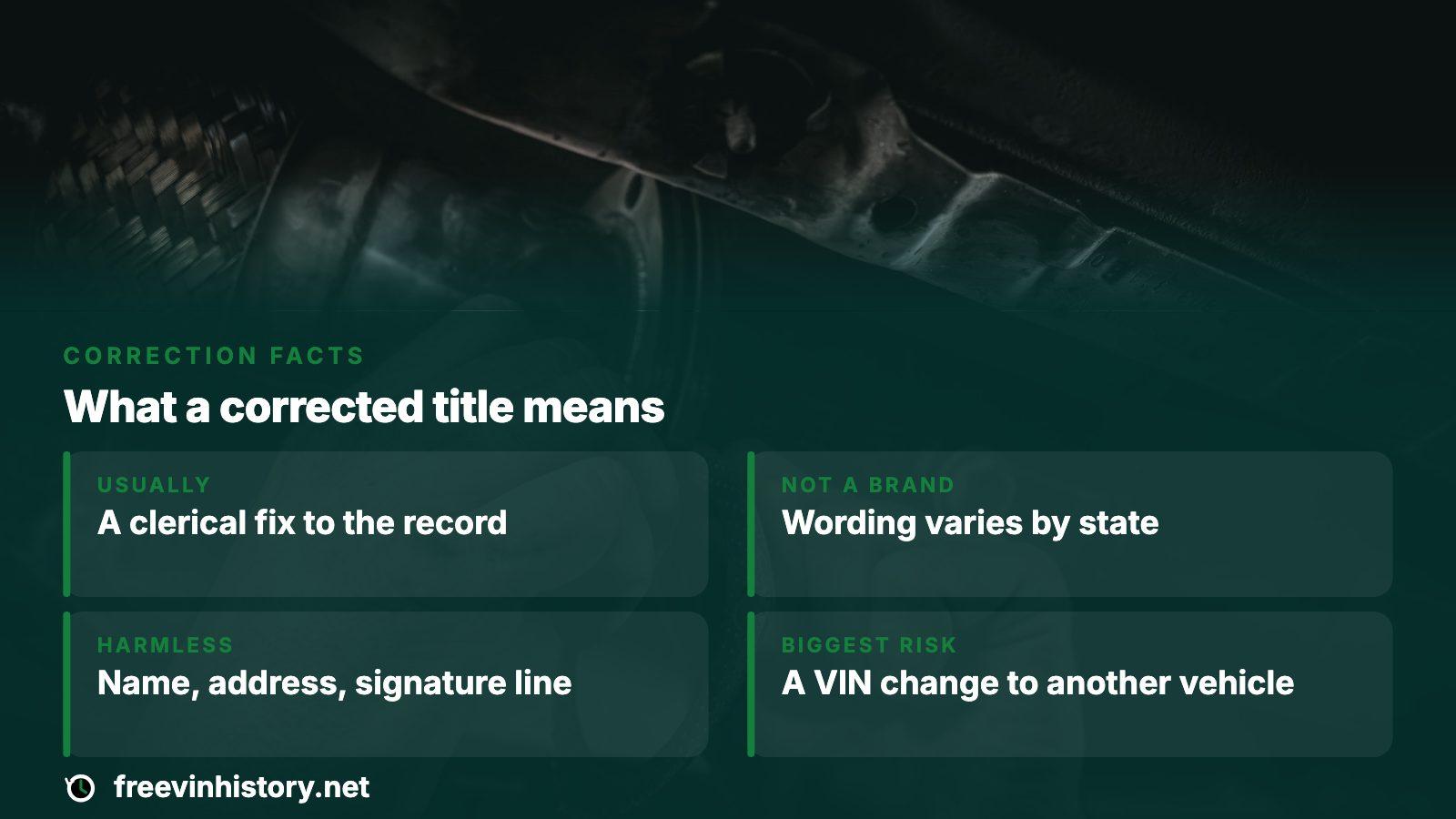
Corrected title is not a single national brand. It usually means the state agency repaired a clerical error on the record: a name, a vehicle description or a VIN digit. A name or spelling fix is minor. A change to the VIN or the vehicle description deserves proof, because the title might belong to a different car.
- What it usually is
- A clerical fix to a name, description or VIN
- Not a brand
- No federal definition; wording varies by state
- Biggest risk
- A VIN change that points at a different vehicle
- Best first step
- Ask the seller what was corrected, and why
What the phrase means on a used car
Unlike salvage or flood, corrected is not a condition of the car. It describes a change to the paper. Somewhere between the first title and the one in the seller's hand, somebody noticed that a field was wrong, and the state agency put it right.
That is why this page sits in a group of report terms rather than damage warnings. A name misspelled by a clerk and a VIN altered to match a stolen car can both end up described as a correction. Your job is to learn which one you are looking at before any money moves.
Because states word their paperwork differently, a title marked corrected, amended or reissued in one place may not look like that anywhere else. Ask what was changed, not what the stamp says.
Fixes that are usually harmless
Texas treats a misspelled owner name as a county tax office matter. If the slip came from the department or the county, the repair costs nothing. If the title followed what the owner wrote on the application, the owner files a fresh application and pays the fee. Either way, the car itself is untouched.
California handles lined-out entries and signatures put in the wrong place with a Statement of Error or Erasure, completed by the person who made the entry. Dealers and lenders can vouch for slips made by their own staff. These are housekeeping steps.
- A misspelled first or last name
- An address typed wrong
- A signature or printed name entered on the wrong line
- A lienholder name that needs updating
None of these says anything about wrecks or odometers. They do say the record was touched, so the seller should be able to show the paperwork.
Fixes that deserve a harder look
A vehicle description error is a different matter. California's manual asks the owner for the title, a verification of the vehicle on a REG 31 form, and a REG 256 statement of facts that explains the circumstances. Papers from the earlier application must show that the right data went in and was entered wrongly.
A VIN change gets even more scrutiny. The manual warns that a substantial change may mean the title was written for a different vehicle. If the new number is far from the old one, the owner must document that it is not another car's VIN, or post a motor vehicle bond.
Why a VIN correction matters
A title that was corrected to a different VIN is exactly what a seller of a rebuilt, stolen or swapped vehicle might want. Treat it as a reason to inspect the plate and the paperwork, not as proof of fraud.
When the title described the wrong car
Mix-ups happen. California's procedures cover a title that lists a vehicle other than the one an owner actually acquired. Whoever holds the wrong paper must hand it to whoever owns the car it describes and collect the right one. The manual also says the wrong title must not be defaced or corrected by hand.
For a buyer, the practical lesson is simple: a title with scribbles, white-out or crossed-out numbers is not a corrected title. It is a damaged one. Walk away until the state has issued a clean replacement.
Texas gives a related tip for private sales: the name and address on the title and registration should match the person selling. If the seller's name differs because of a recent correction, ask to see the reissue letter or receipt.
How to size up a corrected title in five minutes
| On the title | Likely reason | Your move |
|---|---|---|
| Name changed or fixed | Clerical fix | Match the seller's ID to the title |
| Different body type or weight | Description error repaired | Ask for the state's correction paperwork |
| VIN differs from older records | Possible VIN correction | Compare dash, door and title numbers |
| Hand corrections, erasures | Altered document | Refuse it; request a reissued title |
| No explanation offered | Unknown | Run the VIN before going further |
Stand at the car with the title in your hand. The number on the dash should be present, secure and unaltered, and the plate should not look repainted, which is the checklist Texas suggests for spotting swapped identification.
What the free official sources can and cannot show
NMVTIS is the national database states and approved providers use against title fraud, and the Justice Department's VehicleHistory.gov site explains how it protects buyers. It is the official layer to understand before you trust any single seller's document.
State DMV pages describe how corrections work, but they do not hand out a vehicle's correction log by VIN. Nothing in a free lookup will tell you whether a title was fixed last spring for a typo or for a changed VIN.
That gap is where a VIN-based report helps. FreeVINHistory starts with a free preview for any VIN. If the preview shows title activity you cannot explain, the one-time report adds the detail. Pricing sits on the pricing page.
Questions to put to the seller
- What exactly was corrected, and when?
- Did the state agency or the seller's lender cause the mistake?
- Can you show the application or receipt for the correction?
- Was the VIN or the vehicle description touched, or only a name?
- Does the VIN on the paper match the dash and the older records?
A seller with a clean story usually has paperwork ready. Vague answers, or a title that arrives only after you pay a deposit, are reason enough to stop.

What to do next
Check the title in your hand against the car, then run the VIN. If the numbers agree and the correction was a name or address, you can treat it like any other title and keep negotiating. If the VIN or description changed, ask for the state paperwork and have an independent inspection done.
When something stays unexplained after all that, the safest price is no price. Another car is easy to find, and a title problem is slow and costly to untangle after you own it.
Where this information comes from
- Texas DMV: Buying or selling a vehicle — Source for the county tax office route and fee rule on name corrections, plus the seller-matching and VIN tips.
- California DMV manual: Correcting a vehicle description error — Documents needed to fix a description and the warning about changed VINs.
- California DMV manual: VIN corrections — What proof or bond a substantial VIN change requires.
- California DMV manual: Title describes the wrong vehicle — How a mismatched title is swapped, and why it must not be altered by hand.
- California DMV manual: Errors and erasures on the title — Who signs the statement when an entry on a title was made in error.
- VehicleHistory.gov: NMVTIS — Federal purpose of the national title information system.
Sources and photos: Facts checked against the sources above in November 2026. Photos by Shadow Photography, Carrie Allen www.carrieallen.com and Martin Fennema on Unsplash; diagrams by FreeVINHistory.
Keep reading
- Title issue reported on a car's history: what it can meanAnother title entry that calls for questions before you buy.
- Certificate of title meaning: what the document proves and what it hidesWhat a title proves and what it leaves out.
- Title transfer on a vehicle history report: what the entry meansHow transfer entries show who held the car.
- Car title search by VIN free: what you can see before you payWhich no-cost title lookups exist and what they miss.
Frequently asked questions
Is a corrected title the same as a salvage title?
No. Salvage describes damage and a total-loss decision. A correction describes a fix to the paperwork. A single car can have both, so look for brands separately from corrections, and ask the seller to explain each one in plain terms.
Does a corrected title lower a car's value?
A name or address fix should not. A changed VIN or vehicle description can worry buyers and lenders until the paperwork is shown. Value depends on the explanation, so get it in writing before you negotiate.
Can I fix an error on my own title?
Usually, yes, through the state agency or a county office. Texas sends name errors to the county tax office, and California publishes forms for description and VIN fixes. Never write over the title yourself, since hand changes can void it.
Can a corrected title hide a VIN swap?
It can, which is why a changed VIN needs documents. California asks for proof that the new number is not another vehicle's, or a bond. Compare the dash number with the title and with earlier records.
Will a VIN check show that a title was corrected?
Sometimes. Reports show title events, but not every state records a reason for a fix. A free preview can flag title activity, and the paid report adds detail. Still ask the seller for the paperwork behind it.
Now check the car itself
The guide explains what to look for. The report shows what this VIN has on record.