THE SHORT ANSWER
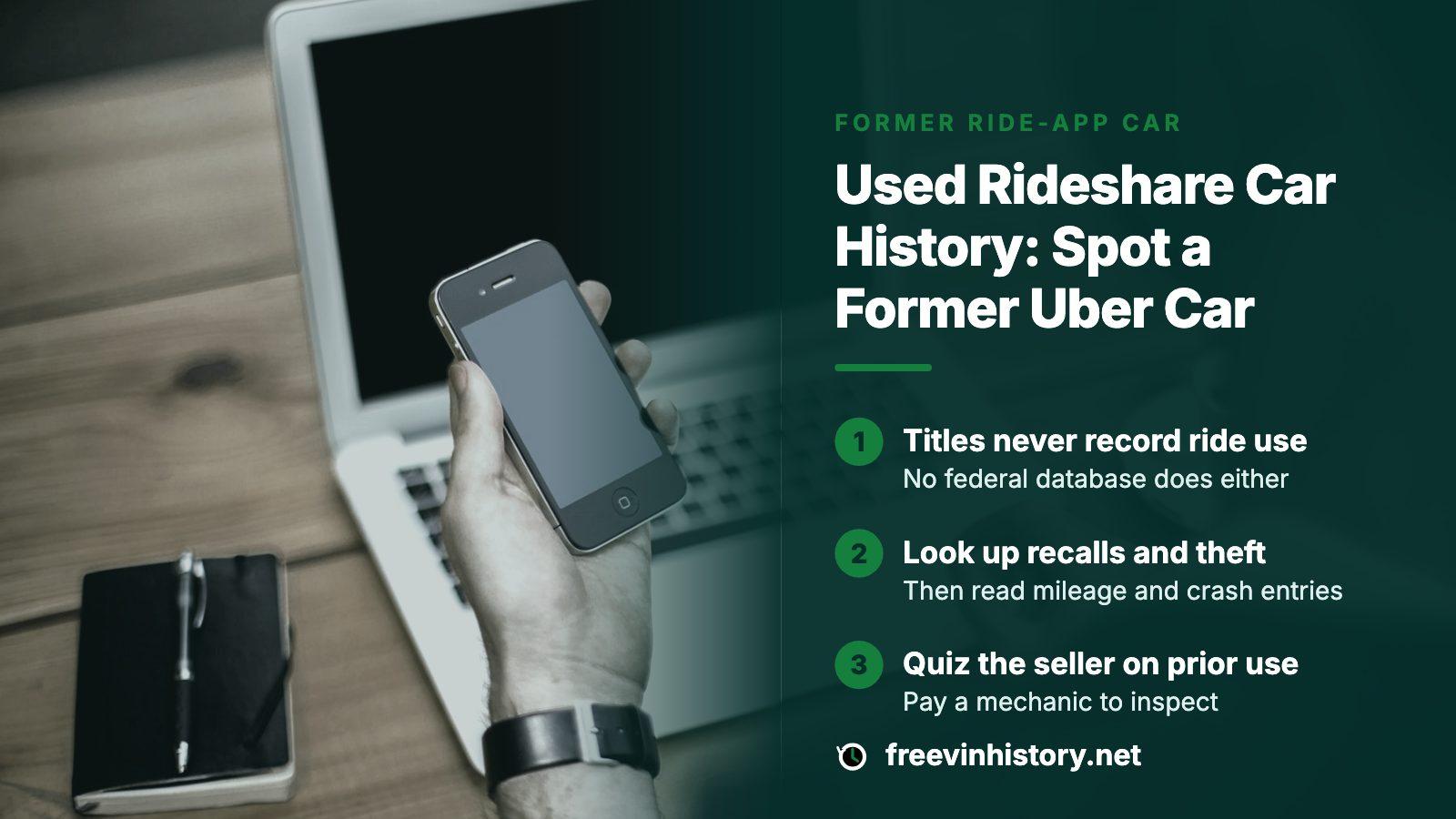
A title never records ride-app work, and no federal database does either. Look the VIN up with NHTSA to see unfixed safety recalls, and with NICB for insurer theft or salvage reports. Then study the mileage trail and any crash entries in a title-based report, quiz the seller about prior use, and pay a mechanic to judge the wear no record captures.
- Recall lookup
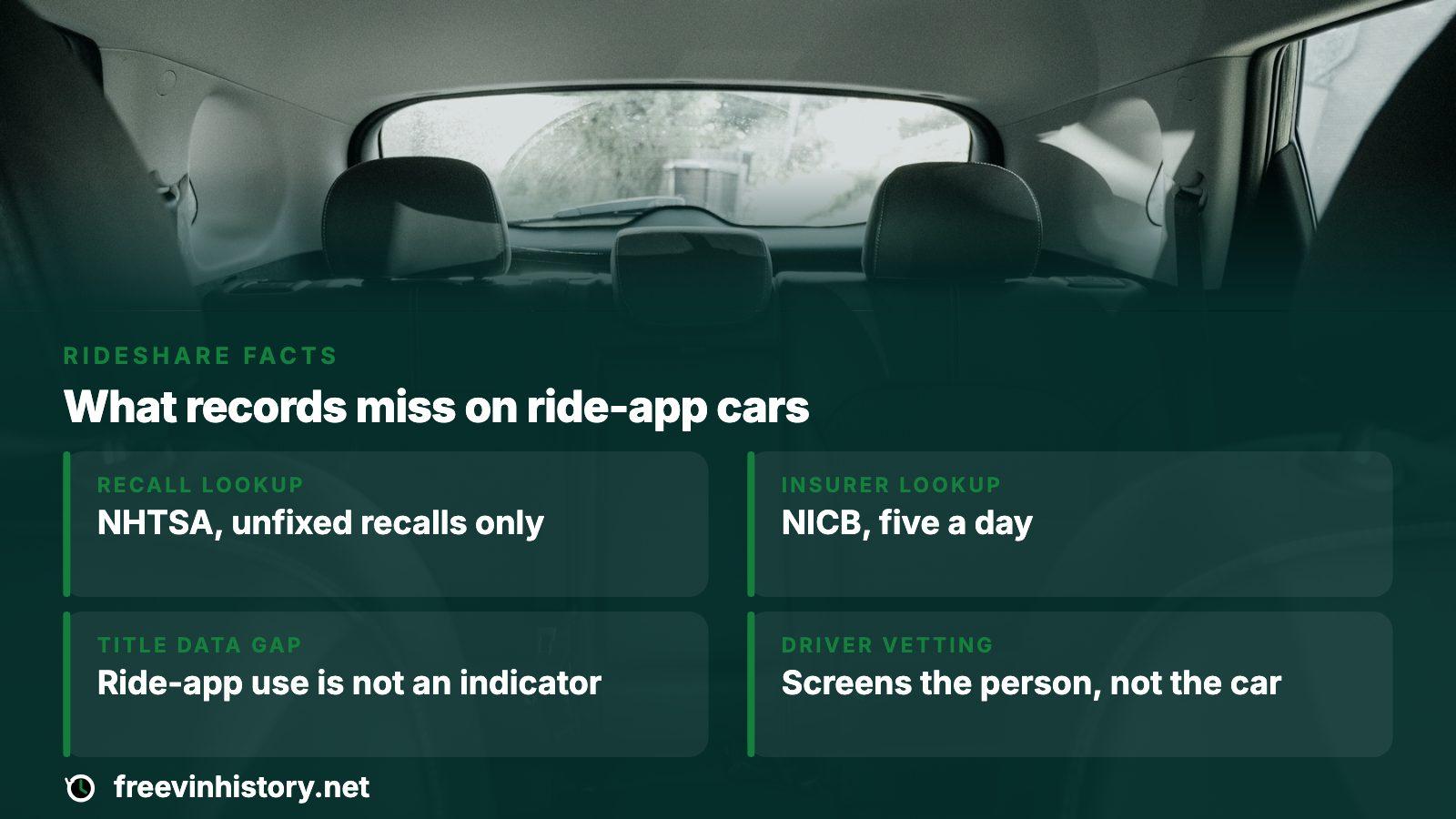
- NHTSA, VIN search, unfixed recalls only
- Insurer lookup
- NICB VINCheck, five lookups a day per connection
- Title data gap
- Ride-app use is none of NMVTIS's five indicators
- Driver vetting
- Uber screens the person, not the car's past
Why a former rideshare car carries no badge
A driver who signs up with Uber hands over a license, proof of residency, registration and insurance. The platform then screens the person's driving record and criminal history. Nothing in that process writes a note onto the car's title, so when the car is sold the next buyer sees an ordinary used sedan.
Uber's own requirements page asks for an eligible 4-door vehicle and adds that every city sets its own vehicle rules. Those rules govern who may drive, not what gets recorded about the car afterward. The practical result is that you must go looking for signs, and the VIN is where that search begins.
What heavy passenger use does to a car
The concern is mileage and the pattern behind it. A car that works shifts can pile up miles far faster than a commuter, with long idle stretches, stop-and-go city driving and many different people sitting in the back. Brakes, tires, suspension and door hardware take the punishment.
- Odometer high for the model year, with few service entries to match
- Worn pedal rubber and a sagging driver seat
- Rear door panels and seat bottoms scuffed more than the front
- Mounts or cradles for phones, or sticky residue on the dash
- Cleaning smells that hide something else
None of these proves rideshare use. A single sign is a prompt for a question, and several together justify a closer look by a mechanic.
The free official lookups worth running first
Three public sources are worth a few minutes each. They answer narrow questions, and not one says how the car was driven.
| Lookup | Reveals | Misses |
|---|---|---|
| NHTSA recalls | An open safety recall on this exact VIN | Fixed recalls, brand-new campaigns, maker goodwill programs |
| NICB VINCheck | A theft, salvage or flood report from a participating insurer | Police files, opted-out insurers, how the car was used |
| NMVTIS | Title state, brands, odometer, total loss, salvage | Rental, taxi or ride-app service |
NICB cautions that a spotless VINCheck result promises nothing. The Justice Department, for its part, reads a thin NMVTIS report as reassuring, given how few indicators it tracks.
Pull the VIN before you trust any listing
Take all 17 characters off the vehicle in person instead of the advertisement. Crouch outside, look through the glass at the bottom-left corner, then find the same string on the registration card. Both should agree with the title the seller shows.
A mismatch ends the conversation. When the numbers agree, put the VIN into the recall search first: it takes seconds and exposes any open repair that would become your problem. Then try VINCheck, which allows five lookups a day from one connection, a limit that bites when you shop several cars.
What drivers and riders report to NHTSA
Anyone can read the complaints owners lodge with NHTSA, and a few come from people who earn a living in these cars. They show how the work tends to surface problems.
From an NHTSA owner complaint
A driver who works for Uber reported that the infotainment unit in a 2016 Honda Accord began blasting loud static soon after start-up. He said it hurt his passengers' ears, kept him from working, and that the dealer's fix would cost over $1000. No crash or injury was reported. Complaint 11675839.
Read that as a reminder to test every electronic feature, because a car used for passengers all day has had them running constantly.
From an NHTSA owner complaint
A passenger riding in a 2016 Hyundai Sonata used for Lyft described a crash where the air bags stayed shut, and reported one injury. The complaint adds that the car's history showed three earlier accidents. Complaint 11404606.
These are individual accounts, not proof of a defect. They do show why a car's accident count and airbag status deserve attention before you sign.
Records that point to hard use
Since use type is invisible in federal data, look for its effects. An odometer reading that climbs steeply between two dates, a salvage or total loss entry, or several accident records in a short span all fit a car that spent years on the road with strangers behind the wheel.
A report built on title data can line up these entries by date, so you can judge whether a mileage jump and a damage record belong to the same stretch. Our VIN preview costs nothing and hints at whether any entries exist before you commit to the full report, a single purchase.
Questions for the seller and the mechanic
Ask outright whether the car ever worked for a ride app, a delivery service or a rental program. A vague answer tells you something. Ask for maintenance paperwork too, since the Justice Department's buying advice includes seeing service records and talking with the last owner.
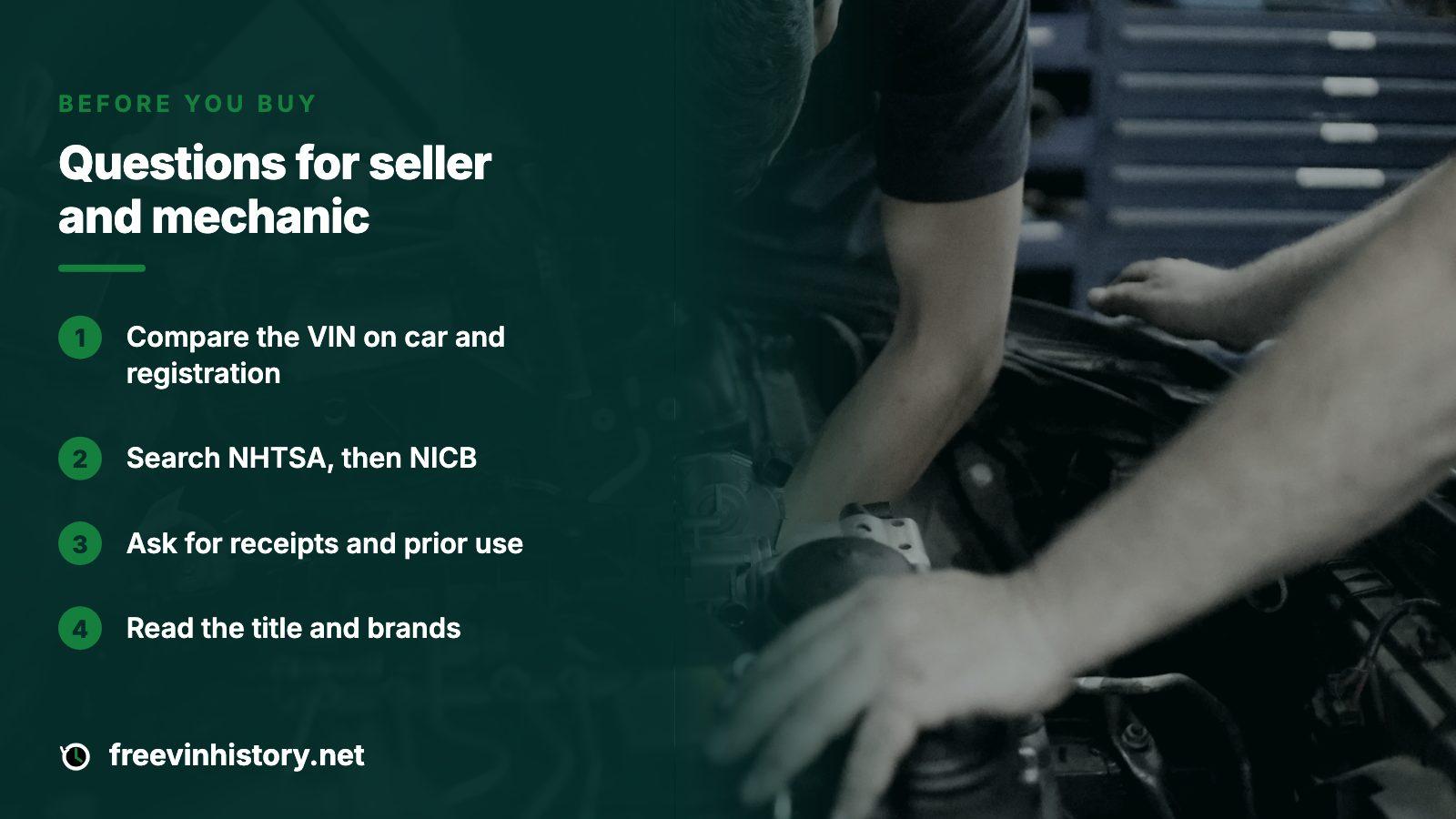
- Note the VIN on the car and on the registration, and compare them.
- Search NHTSA for recalls, then NICB for insurer reports.
- Ask for receipts and say plainly that you want to know about prior use.
- Read the title, brand and odometer entries in a history report.
- Book a mechanic to look at brakes, tires, suspension and the cabin.
Only the last step can judge wear, so do not skip it because the paper trail looks clean.
Deciding whether the car is worth it
A former rideshare car is not automatically a bad buy. Some are well maintained by owners who depend on them, and a high-mileage car with documented service can beat a low-mileage one with no records. The risk is paying a low-mileage price for a car that has lived a hard life.
Weigh the odometer against the model year, treat every brand or total loss entry as serious, and use any wear the mechanic finds to negotiate or walk away. If the free lookups come back clean but the seller stays evasive, the evasiveness is worth more than the clean result.
Where this information comes from
- Uber: driver requirements — What the platform asks of drivers and vehicles, and what its screening covers.
- NMVTIS: understanding a vehicle history report — The five indicators a federal title report includes.
- NMVTIS: used car buying tips — Inspection, service records and previous-owner advice.
- NHTSA: check for recalls — VIN recall search, its limits and where the VIN is printed.
- NICB: VINCheck — Free insurer theft and salvage lookup and its caveats.
- NHTSA owner complaint 11675839 — owner experience, paraphrased
- NHTSA owner complaint 11404606 — owner experience, paraphrased
Sources and photos: Facts checked against the sources above in November 2026. Photos by Alejandro Escamilla, Mustafa Sheikhmouss and THLT LCX on Unsplash; diagrams by FreeVINHistory.
Keep reading
- Former taxi car history: what the free records show and what they missTaxi use is the closest cousin of ride-app driving.
- Former rental car history: what free sources show and what they missHow former rental cars show up in recalls and title data.
- Fleet vehicle meaning: what it says about a used car's pastWhat fleet use means and what records it leaves.
- Free odometer check by VIN: what you can verify before you payCheck the mileage trail on a high-mileage car.
Frequently asked questions
Can I find out if a used car was an Uber or Lyft car?
Not from any official record, since title data and insurer lookups leave out use type. Infer it from fast mileage growth, crash entries, worn interiors and the seller's answers. Ask outright, then get a mechanic to inspect it.
Does a rideshare history appear on the title?
No. States brand titles for conditions such as junk, salvage or flood, and ride-app service is not one of them. A title can only hint through damage or total loss entries, which may still be a useful clue.
Is a former rideshare car a bad buy?
Not necessarily. Heavy use wears brakes, tires and interiors, but owners who depend on a car for income often service it on schedule. Judge the specific car by service records, odometer against age and a mechanic's inspection.
What free tools should I use on a used car?
Start with NHTSA's recall search and NICB VINCheck. Both cost nothing and need an accurate VIN, but each covers one slice only: open safety recalls in one case, insurer theft and salvage reports in the other. Treat them as a first screen.
Should I run a VIN preview before a full report?
Yes. The free preview hints at whether records exist for that VIN. If it points to title, crash or mileage entries worth reading, the full report is a single payment, and nothing renews.
Now check the car itself
The guide explains what to look for. The report shows what this VIN has on record.